
Home » ICFR Audit Services in Bangalore
ICFR Audit Services In Bangalore That Connect Risk, Control, and Evidence In One Matrix
Build, Test & Strengthen Internal Controls Over Financial Reporting with a Risk-Based ICFR Implementation and Audit in Bangalore
Behind every figure in your financial statements sits a chain of approvals, system checks and reviews. Our ICFR audit services in Bangalore, delivered by a Chartered Accountant-led team, examine each link in your financial reporting controls using the evidence standards a statutory auditor expects. You get a clear view of which controls hold and which need work, along with a practical plan to strengthen them.

What Are ICFR Audit Services In Bangalore?
ICFR audit services in Bangalore test whether the controls behind your financial statements are well designed and actually working, so that reported numbers can be relied on.
ICFR stands for internal controls over financial reporting. In India, the same idea sits inside the term internal financial controls (IFC) under the Companies Act, 2013. Directors report on the adequacy of these controls, and statutory auditors report on the same under Section 143(3)(i).
The work matters for three reasons:
- It gives the board and audit committee evidence on how well your financial reporting controls work.
- It prepares Indian subsidiaries for scrutiny from parent companies, lenders and investors.
- It reduces the chance of misstatements reaching your financial statements and financial reports.
When Should Bangalore Business Commission An Internal Financial Controls Audit?
Controls drift whenever the business changes faster than the documentation does.
- If mandated by the Companies Act, 2013, based on threshold
- A new ERP, a migration, or a major system upgrade
- Rapid headcount growth in finance, procurement, or sales operations
- Acquisition, merger, or restructuring
- Preparing for a funding round, due diligence, or a listing
- A fraud incident, near miss, or whistleblower complaint
- Becoming an Indian subsidiary of a US or UAE parent with group reporting deadlines
- Repeated audit observations, late closes or recurring reconciliation breaks
Related reading: How to Determine the Scope of an Internal Audit in India

ICFR Audit Services in Bangalore: From Single Test to Full Engagement
Take any of our ICFR testing services, ICFR consulting services, or ICFR compliance services on its own, or combine them into one engagement.
| Service | What it covers |
|---|---|
| ICFR framework assessment | Mapping controls to COSO and Indian IFC expectations |
| RCM development | Risks, owners, frequency and evidence in one matrix |
| SOP and process-control review | Written procedures versus actual practice |
| Design effectiveness testing | Can the control prevent or detect an error? |
| Operating effectiveness testing | Did it run consistently through the period? |
| IT controls | Access, change management, interfaces, reports |
| Segregation of duties review | Conflicting access and approval rights |
| Remediation support | Prioritised fixes and retesting |
Our ICFR Audit Methodology in Bangalore: From Risk Assessment to Control Assurance
We follow a five-stage methodology to ensure that every test is linked to an identified financial reporting risk. ICFR testing evaluates design effectiveness first, followed by operating effectiveness.
| Stage | What We Do | What You Receive |
|---|---|---|
| 1. Scoping and Risk Assessment | Identify material accounts, relevant assertions and financial reporting risks. | Scope memorandum and risk map. |
| 2. Documentation | Develop or update process narratives, flowcharts and the Risk and Control Matrix (RCM). | Reviewed and approved RCM. |
| 3. Walkthroughs | Trace a transaction from initiation to completion for each relevant process. | Documented walkthrough notes. |
| 4. Control Testing | Evaluate control design effectiveness, followed by operating effectiveness using defined samples. | Testing workpapers supported by audit evidence. |
| 5. Reporting and Remediation | Evaluate and grade control deficiencies, agree on corrective actions and conduct retesting. | Deficiency report and remediation closure tracker. |
What Does An ICFR Audit In Bangalore Test?
Scope follows your financial statements, from governance down to individual transactions.
Business processes
Order to cash, from billing to collections; Procure to pay, from vendor setup to payment; Payroll, fixed assets and inventory
Reporting and oversight
Financial close, journal entries and reconciliations; Entity-level controls such as audit committee oversight and whistleblower channels
Technology
IT controls covering user access and change management; Audit trail of edits, deletions and postings
Follow the Invoice: How ICFR Testing Services Trace One Purchase Through Six Controls
Our process testing begins with one vendor invoice, traced from request to ledger.
| Stage | What can go wrong | Control we test |
|---|---|---|
| Vendor creation | Fictitious or duplicate vendor | Independent approval of master changes |
| Purchase order | Spend without authority | Approval matrix enforced in ERP |
| Goods receipt | Paying for goods not received | Receipt by someone other than the buyer |
| Invoice posting | Wrong amount or period | Three-way match with tolerances |
| Payment release | Payment to a changed bank account | Dual authorisation |
| Period-end | Missed accruals | Review of open purchase orders |
What Are The Common ICFR Control Deficiencies We Find in Bangalore Businesses?
Most deficiencies grow out of ordinary operating habits. These are the ones that surface again and again.
Red flag 1: The two-hat
user
What we see: One person creates and approves journal entries.
What it risks: Misstatements that nobody is positioned to catch.
Red flag 2: The unreviewed reconciliation
What we see: Reconciliations are prepared but never signed off by a reviewer.
What it risks: Small errors that build up across periods.
Red flag 3: The SOP nobody follows
What we see: The SOP asks for a second approval on large invoices. One person clears them alone.
What it risks: Leaders trust a safeguard that isn’t there.
Red flag 4: The login everyone uses
What we see: One finance login shared across the team. Admin rights nobody took back.
What it risks: A wrong entry appears, and no one can say who made it.
Red flag 5: The spreadsheet that runs the close
What we see: Accrual workings in a file many people edit. No record of changes.
What it risks: One broken formula can reach the financials unnoticed.
Red flag 6: The outdated approval matrix
What we see: Sign-off limits name people who moved roles or left. Newer managers approve without formal authority.
What it risks: The wrong people clear spend and entries.
Red flag 7: The missing evidence
What we see: Controls performed but nothing retained to prove it.
What it risks: A control that cannot be tested at all.
Why Choose MSNA For ICFR Audit Services In Bangalore?
The phrase “ICFR audit services in Bangalore” is four ideas, and each one should carry a promise. Here is how we read them.
- ICFR means a recognised framework. We map work to COSO and Indian IFC requirements so findings hold up in front of auditors and boards.
- Audit means evidence. Every conclusion is backed by documented samples, system reports and reperformance.
- Services means continuity. A single report rarely changes behaviour, so we support remediation and retesting.
- Bangalore means proximity. Our team is based in the same city as your finance and IT teams.
Our engagement team is led by Chartered Accountants who are members of ICAI. Every engagement is partner-supervised, and workpapers are reviewed before findings reach you.

Industries We Serve With ICFR Audit Services In Bangalore
The framework stays constant, but the risks shift by sector, so we tailor the RCM.
Startups
Founder approvals, ESOP accounting, close discipline
Captive and GCC units
Cost allocations and parent reporting packages
Exporters
Foreign exchange and receivable ageing
IT and SaaS
Revenue recognition, subscription billing, access controls
Manufacturing
Inventory valuation, procurement, asset capitalisation

Beyond Compliance : Building Controls That Improve Business Performance
Compliance asks whether a control existed. Performance asks whether it made your finance team faster and more reliable.
A good control is a decision made once so that nobody has to remake it every month. An approval limit settles who signs. A reconciliation owner settles who chases the variance. Over a few reporting cycles, those settled decisions give finance leaders more time for analysis.
- A faster, more predictable month-end close
- Fewer repeat audit observations
- A clear account for boards and parent companies of how numbers are produced
When Policy and Practice Part Ways: ICFR Audit Case Files
SOPs describe the intended process, but systems and habits decide what actually happens. These cases show what we find when we compare the two.
Story 1: The SaaS subsidiary with one person doing two jobs
Problem
A software company’s Indian subsidiary allowed the same finance executive to raise and approve billing adjustments. Revenue was recorded correctly, but nothing would have caught an error or misuse
Solution
We mapped the billing process, tested adjustment samples across the period and confirmed the segregation of duties gap. We recommended a role change in the ERP and a monthly review of all adjustments by the finance controller.
Result
The conflict was removed, adjustment reviews now leave a signed trail, and the control became testable for the parent’s reporting.
Story 2: The manufacturer after an ERP migration
Problem
A manufacturer moved to a new ERP mid-year. Its documented purchase approval controls were not configured in the new system, so orders could be released without the approvals described in the SOPs.
Solution
Process reviews compared the SOPs with live system behaviour and surfaced the gap. We assisted the team in prioritising their configuration issues and retested their approval process once the changes were made.
THE RESULT
The gap was closed before year-end testing, and the RCM was updated to reflect the new system.
Story 3: Former employees still had ERP access
Problem
This services company had never reviewed who could log in to its ERP. When we pulled the user list, it still had people who had left. A few of them could post entries.
Solution
We put the user list next to HR’s leaver list and marked every match. IT then shut those accounts down. We asked for a review every quarter and checked the first one.
THE RESULT
The leaver accounts are closed. Someone now signs off on the access list each quarter.
Ten Questions to Gauge Your Control Health Before an ICFR Audit
Answer yes or no to see where a review would likely start.
- ✓Is your RCM updated within the last 12 months?
- ✓Does every key control have a named owner?
- ✓Are reconciliations reviewed and signed on time?
- ✓Can you show evidence of a control performed six months ago?
- ✓Is ERP user access reviewed twice a year?
- ✓Are large journal entries approved by someone other than the preparer?
- ✓Does your delegation of authority reflect today’s team?
- ✓Are vendor bank changes independently verified?
- ✓Is your accounting audit trail always on?
- ✓Has management tested its own controls this year?
Your score:
- ✓8 to 10 yes answers suggest a solid base.
- ✓5 to 7 point to documentation and evidence gaps.
- ✓0 to 4 suggest controls need structured design before testing.

Ten Questions to Gauge Your Control Health Before an ICFR Audit
Answer yes or no to see where a review would likely start.
- Is your RCM updated within the last 12 months? ✓
- Does every key control have a named owner? ✓
- Are reconciliations reviewed and signed on time? ✓
- Can you show evidence of a control performed six months ago? ✓
- Is ERP user access reviewed twice a year? ✓
- Are large journal entries approved by someone other than the preparer? ✓
- Does your delegation of authority reflect today’s team? ✓
- Are vendor bank changes independently verified? ✓
- Is your accounting audit trail always on? ✓
- Has management tested its own controls this year? ✓
Your Score
- 8 to 10 yes answers suggest a solid base.
- 5 to 7 point to documentation and evidence gaps.
- 0 to 4 suggest controls need structured design before testing.
Your First 30 Days Of ICFR Consulting Services In Bangalore
A clear timeline helps your team plan, so here is how a typical engagement begins.
| Week | What happens |
|---|---|
| Week 1 | Scoping call, document request and process owner introductions |
| Week 2 | Process narratives reviewed, RCM drafted or refreshed |
| Week 3 | Hands-on process reviews with finance, procurement and IT teams |
| Week 4 | Design assessment shared and testing plan agreed |
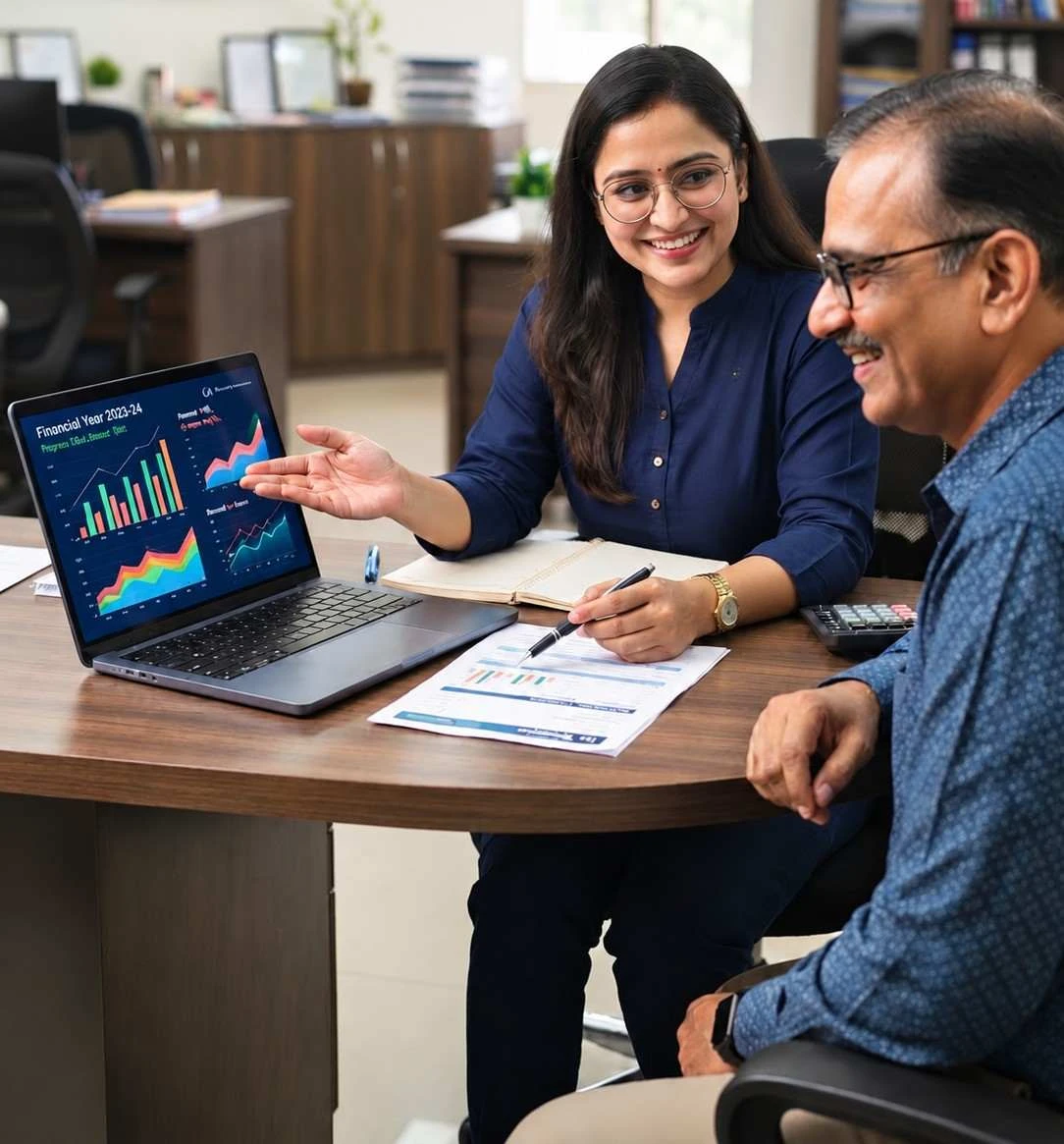
Why Bangalore Businesses Choose a Local Partner For ICFR Audit Services?
Local presence makes process reviews and remediation far more practical.
- On-site access to process owners and IT teams
- Familiarity with local ERPs and outsourced accounting models
- Same working hours, with flexibility for US and UAE parent calls
- Understanding of Indian statutory requirements
MSNA provides India-side services only. Group-level reporting stays with your parent’s advisors.
To discuss ICFR audit services in Bangalore for your business, book a short consultation with our team.
Frequently Asked Questions About ICFR Audit Services In Bangalore
What is the difference between ICFR and IFC?
ICFR is the COSO-based concept. IFC is the broader Indian statutory term under the Companies Act, 2013. An ICFR audit is the main way to evidence IFC over financial reporting.
Who needs ICFR testing?
Companies covered by Section 143(3)(i). Some private companies are exempt based on turnover and borrowings, so confirm current MCA thresholds. Many exempt companies test voluntarily.
What is a Risk Control Matrix?
A document linking each financial reporting risk to its control, owner, frequency and evidence.
How often should ICFR controls be tested?
Usually annually. High-risk or fast-changing areas may need quarterly or half-yearly testing.
What documents are required for an ICFR audit?
An ICFR audit usually needs process narratives, SOPs, the current Risk Control Matrix, the delegation of authority and the latest trial balance. Sample transactions with approvals, ERP access reports and change logs are also requested.
How much does an ICFR audit cost in Bangalore?
The cost depends on the number of entities, processes in scope, documentation quality and ERP complexity. Pricing is usually settled after a short scoping discussion and a written proposal.
Can ICFR testing be performed remotely?
Largely yes. Process observation is often better on site, so we usually combine both.
Does MSNA provide ICFR remediation support?
Yes. We help prioritise deficiencies, redesign controls, update the RCM and retest. Implementation stays with your team.