Starting your own company can feel like a dream. You’re building something from the ground up, chasing a vision, and doing things your way. But here’s the hard truth: most startups don’t survive. According to a report by CB Insights, around 38% of startups fail because they run out of cash. What’s worse? Many of them were actually making money when they failed. That’s the dangerous part – revenue doesn’t always mean stability.
And this is where things go wrong. Founders are usually good at the product, the idea, or even marketing. But financial planning? Not always a strong suit. Most small startups can’t afford a full-time CFO, but they still need someone to handle the money side of things smartly.
That’s where a Virtual CFO (VCFO) comes in. A VCFO works remotely, on-demand, or part-time to help businesses plan, manage, and optimize their finances. For a startup, this can be a game-changer.
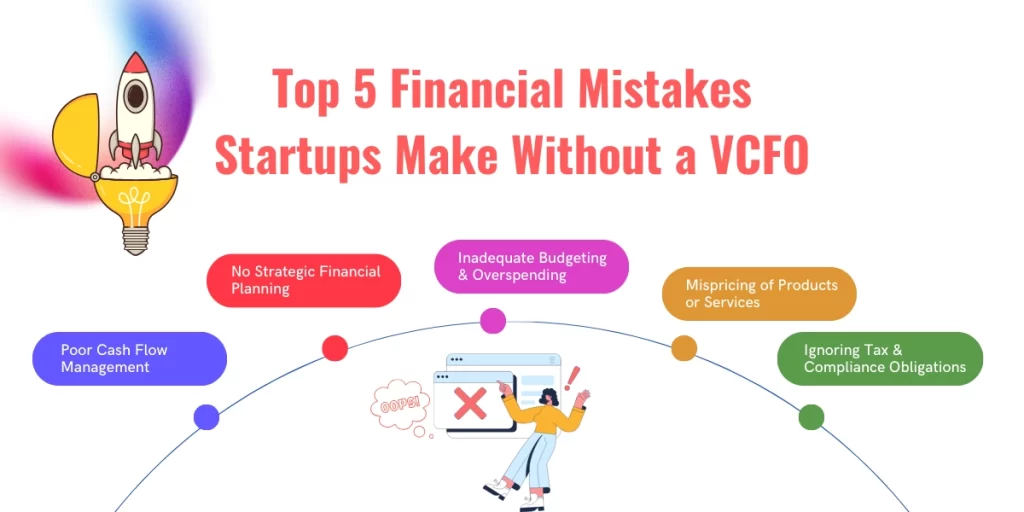
Let’s dive into five financial mistakes of startups often made without a VCFO and how having one can save you a ton of stress, money, and trouble.
5 Financial Mistakes of Startups to Avoid | How a Virtual CFO Can Help
1. Poor Cash Flow Management: A Key Financial Mistake of Startups to Avoid
Cash flow isn’t just a buzzword, it’s the lifeline of your business. You can be profitable on paper and still be struggling to pay your bills. That’s because cash flow is all about timing. Money comes in from customers, but it might come in 30 or 60 days after you’ve already paid your vendors or employees. That gap is deadly if you don’t manage it.
Most startups make the mistake of focusing on revenue and profit instead of cash. They assume if they’re closing deals, they’re safe. But without someone watching your cash inflows and outflows weekly or even daily, you could be flying blind.
When you close a revenue of let’s say INR 100, you might receive INR 108. You may now ask, “Wow, how INR 8 extra?” and the answer is as below:
Revenue: INR 100
GST charged: INR 18
Total Bill: INR 118
Less: TDS to be deducted and paid to Government – INR 10
Amount received in bank: INR 108
Less: GST to be paid back to Government: INR 18
Net Receipts: INR 90
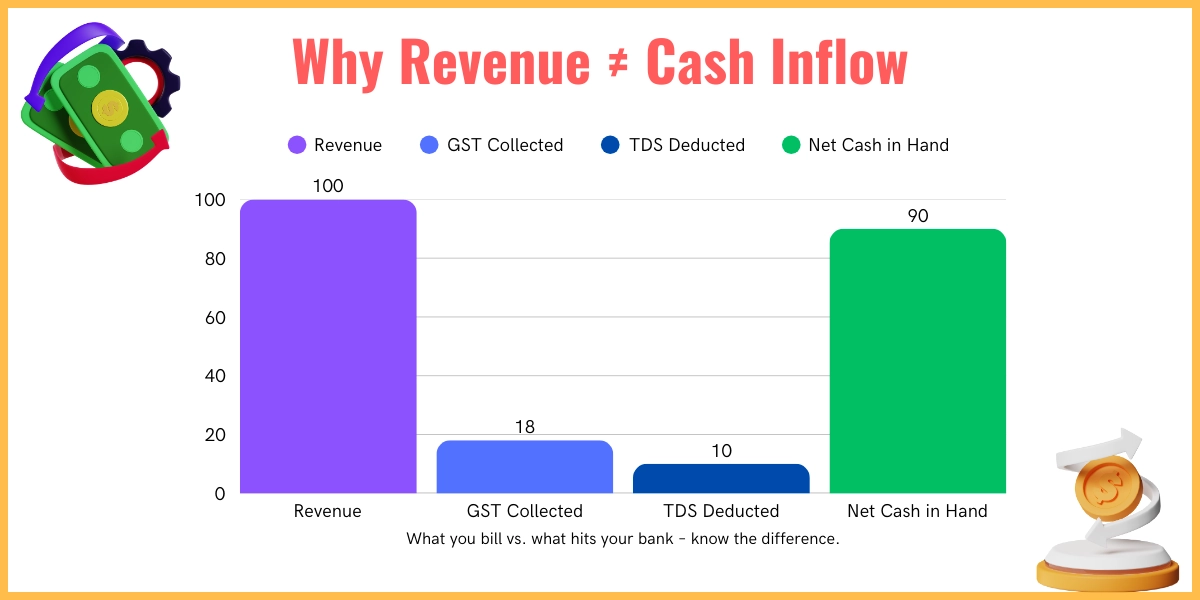
So you might ask, “Hey, so it’s not 108, but just INR 90. But I had committed my costs at 100, assuming I would receive 100.” This is where the first mistake can happen, and this is where a finance person is needed to help.
Now, if you are unable to understand this and these calculations seem complex, outsourcing this to an expert is the best way to move forward and build your dream business.
Know that your revenue from customers is not equal to your cash inflow.
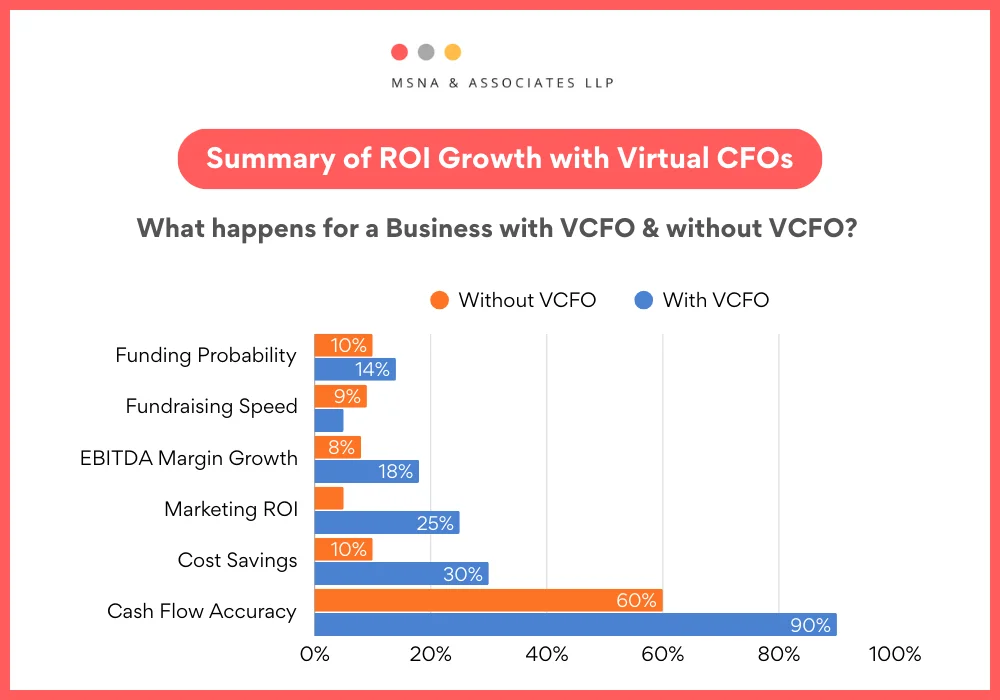
A VCFO helps with cash flow forecasting, predicting when money will come in and go out. This lets you plan ahead, avoid shortfalls, and make smart decisions. Whether you need to hire next month or upgrade tools, a VCFO can help you know if you can afford it.
Companies like Thirlwell & Co. emphasize this often: cash flow is king, especially in early-stage businesses.
A VCFO gives you the visibility and control needed to prevent this common financial mistake of startups.
2. Lack of Strategic Financial Planning Without VCFO - Another Mistake
You’d never build a house without a blueprint. Yet many startups operate without a financial roadmap. They might have a vision and a goal, but no clear plan on how to reach it.
This lack of direction leads to knee-jerk decisions, like raising prices when cash is tight or scaling too fast without a buffer. These are classic startup financial planning mistakes.
Strategic financial planning is about the long game. It’s not just about surviving today, it’s about being ready for tomorrow. A VCFO helps you look ahead. They analyze your revenue models, identify growth levers, and stress-test your financial assumptions. What happens if you lose a key client? Can you afford to expand next quarter?
With a VCFO, you’re not just reacting. You’re preparing. They build multiple financial scenarios so you’re ready no matter what.
You’ll have clear answers to questions like:
- How much should we raise in our next funding round?
- Can we survive 3 months without new revenue?
- Are we investing too much in one channel?
Without this kind of planning, you risk overextending or missing opportunities simply because you weren’t financially ready.
3. Inadequate Budgeting and Overspending: A Common Financial Mistake of Startups
Budgets may sound boring, but they’re necessary. A budget is basically your startup’s financial guardrail. It keeps you from going too fast in the wrong direction.
However, many founders either skip budgeting altogether or create overly optimistic ones that don’t reflect reality. They underestimate costs or overestimate revenue. And before they know it, they’ve overspent.
Here’s where it stings: when you don’t track expenses closely, little costs add up fast. A few extra SaaS subscriptions, unplanned travel, a couple of marketing experiments, and suddenly your runway’s a lot shorter than you thought.
One of the common financial problems faced by startups is a lack of cost discipline. A VCFO helps prevent this. They create realistic, data-backed budgets. Not guesswork. They factor in recurring and hidden costs, map out your fixed and variable expenses, and regularly compare your actual spending against the plan.
More importantly, they adjust the budget as things change. They don’t just build a spreadsheet and walk away; they stay involved to help you manage finances month after month.
A Virtual CFO usually prepares an Annual Operating Plan(AOP), which has a clear financial budget that will be reviewed every month during the MIS meeting to see if there is a major deviation. Without this financial discipline, it becomes difficult to build successful businesses.
This hands-on support is why so many early-stage businesses choose to work with virtual CFO services
4. Mispricing Products or Services - Mistake That Deviates Your Startup
Pricing is tricky. Set your price too high, and you will scare off customers. Set it too low and you bleed money. Founders often base pricing on gut feelings or competitors’ rates instead of proper financial analysis.
And this can hurt your brand. Among the common financial mistakes of startups, mispricing stands out as one that silently drains profitability and stunts growth.
Pricing also affects how people perceive your brand. A low price might make your product look cheap. A high price with no added value? Just as risky.
Pricing is a financial decision, not just a marketing one. A VCFO helps by:
- Calculating the real cost of delivery
- Identifying your break-even point
- Running pricing simulations
- Assessing the impact of offers or discounts
They’ll also guide you on when to raise prices based on cost changes, demand, or inflation. This ensures your pricing strategy supports growth, not sabotage. It’s one of those financial mistakes to avoid early on if you want a sustainable business model.
At MSNA, we worked with a client who came to us and said, “Sir, we do not know what the issue is with our profits. Though our revenue and customer base is expanding, we are still not able to breakeven and show profits in the books. We are still bleeding every month.”
When we went deeper and analysed, we realized that the client had not factored in their indirect expenses while pricing for their customers. Once we identified this and the client made necessary changes to pricing, automatically the onward and upwards journey of the client started. This is just one single example of how important pricing is and how important an expert advisory on the same is.
5. Ignoring Tax and Compliance Obligations: One of the Costliest Financial Mistakes of Startups
Let’s face it – no one enjoys taxes or compliance paperwork. But ignoring them? That’s a fast track to penalties, audits, and serious legal troubles.
Startups often delay or overlook:
- Quarterly tax filings
- GST or TDS payments
- Payroll compliance
- Regulatory reporting
- Not paying the advance tax on time
- Not focusing on GST reconciliations makes it erroneous
- Not claiming the GST inputs accurately leads to unnecessary cash outflow.
These aren’t minor issues. One slip-up can lead to audits or lost investor confidence. That’s why tax compliance for startups is critical.
A VCFO makes sure your books are clean and deadlines are met. They work with your accountant or directly handle taxes, depending on the setup. More importantly, they keep your startup compliant with local laws, changing tax regulations, and industry-specific rules.
This reduces stress, protects your reputation, and avoids last-minute panic when audit season hits.
Plus, if you’re planning to raise funds, due diligence becomes easier. Investors love businesses that are financially clean and legally compliant. Nobody wants to invest in companies that come with regulatory and legal baggage.
Avoiding Common Financial Mistakes of Startups to Build a Strong Future
Most startups don’t fail because the idea was bad. They fail because money ran out, or was never managed properly in the first place.
The five mistakes we talked about, poor cash flow management, no financial planning, bad budgeting, mispricing, and ignoring tax rules, are common. But they’re avoidable.
That’s where a VCFO comes in. You get all the expertise of a CFO without the full-time cost. You get someone who watches your numbers while you focus on growth.
If you’re a startup founder trying to build something that lasts, don’t treat finance like an afterthought. Partnering with trusted virtual CFO services can give your startup the financial backbone it needs to grow smart and stay alive.
At M S N A & Associates LLP, we work with a lot of clients as their Virtual CFOs, helping them avoid these costly mistakes.
Take Control of Your Startup’s Finances Today
Get tailored financial strategies, improve cash flow, and build a profitable, scalable startup with confidence





Pingback: 10 Business Challenges Addressed by VCFOs in India - MSNA & Associates LLP
Pingback: Top 10 Business Challenges Solved by VCFOs India | MSNA LLP