Top 7 Internal Controls for a Manufacturing Company Every Indian Manufacturer Must Implement
Manufacturing in India has changed. Costs are higher. Compliance rules are stricter. And one small mistake, or one dishonest transaction, can cost lakhs.
That’s where internal controls for manufacturing step in.
They’re not just for big MNCs. Even small and medium Indian manufacturers need practical systems that catch errors early, stop fraud, and keep operations smooth.
Whether it’s a miscounted stock, a fake invoice, an unrecorded cash expense, or an unchecked system login, controls help protect your business from silent losses.
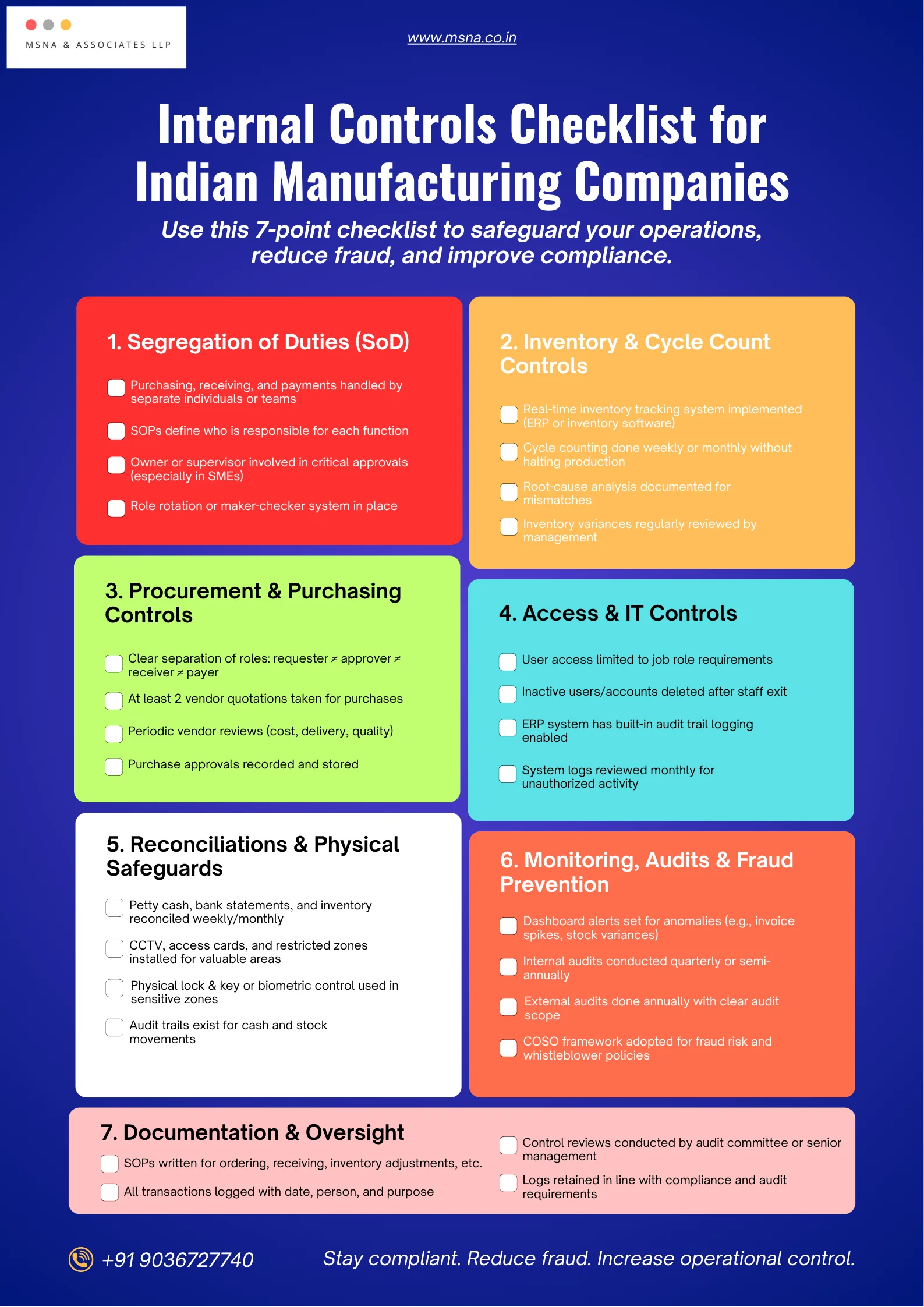
In this blog, we’ll walk you through seven must-have internal controls every Indian manufacturer should implement.
1. Segregation of Duties (SoD) in Indian Manufacturing
What is SoD? (Segregation of Duties)
Segregation of duties divides responsibilities so no one person handles everything, like ordering, receiving, and paying for material. That helps catch errors or shady deals early on.
Why It Works?
When different people check each other’s work, there’s less chance of fraud slipping through unnoticed unless there is collusion, which is a bigger problem to deal with.
SME vs. Large Manufacturer – How they use it?
In a small workshop, you might rotate roles or involve the owner in key approvals.
In large factories, use different teams: one approves purchase orders, another receives goods, and a third deploys them for production. Finance will be a separate team.
Companies such as AICountly and Finsmart emphasize SoD as a core control. Be sure to explain local examples, like how a small Delhi component shop can implement SOD controls, even if they don’t have full-fledged teams.
2. Inventory & Cycle‑Count Controls
Real-Time Tracking of Orders Manufacturing
Manufacturing thrives on timing. If your inventory is off, even by a little, it leads to delays, idle time, or missed orders. That’s why internal controls for manufacturing should include strong inventory systems with real-time visibility.
Cycle Counting vs. Wall‑to‑Wall
- A full wall-to-wall stock count once a year may require shutting down, which is expensive and disruptive.
- Cycle counting checks the inventory piece by piece every day or week. Over time, you spot patterns in errors and fix processes without halting work.
Best practices recommend root-cause analysis whenever counts don’t match. This helps prevent recurring issues. It’s a smarter, leaner way to maintain accuracy.
3. Purchasing & Procurement Controls
Splitting Roles Will Prevent Risks in Manufacturing Sector
Separate responsibility: one person requests, another orders, someone else receives, and a fourth makes payments. This breaks the cycle of potential fraud. It’s one of the most basic but essential internal control procedures in any manufacturing setup.
Bidding & Vendor Reviews
Invite multiple vendors to quote. Compare them on cost, delivery, and quality. Don’t stick with a supplier just out of habit. Reviewing vendors regularly promotes transparency and ensures better deals
4. Access & IT Controls of Manufacturing System
Restrict System Access
Your ERP, accounts, and inventory systems hold critical data. You should limit access to only those who need it. Hence, regularly review user permissions, delete old or inactive accounts, especially after staff members exit from company or department.
Track All Changes
India now requires audit trails in software under Rule 3 of the Companies Accounts Rules, effective April 1, 2023. That means every change in accounting software must be logged, who did it, when, and what changed. The audit log tracks all the modifications in one place and is an effective place to begin an audit.
Use ERP Systems with Built-in Logs
Popular ERPs like Microsoft Dynamics 365, TallyPrime, and Zoho Books include features for ERP audit logs and change tracking. Ensuring your system meets audit trail requirements builds transparency and supports compliance. It’s also a key aspect of any manufacturing internal audit checklist.
5. Reconciliations & Physical Safeguards of Digital Assets
Perform Regular Reconciliations
Match your records with reality: compare bank statements, inventory counts, and petty cash logs every week or month. This catches problems like bank errors or stock shrinkage quickly.
Secure Your Assets with Technology
Use locks, CCTV, access cards, and restricted zones for valuable materials. Physical safeguards are a basic but powerful deterrent against theft.
6. Monitoring, Audits & Fraud Prevention
 Conduct Ongoing Monitoring
Don’t wait for an annual audit. Set up dashboard alerts, like sudden vendor invoice spikes or large stock variances. These flags help you catch issues early.
Perform Internal and External Audits
Have internal audit teams check controls periodically and bring in external auditors annually. This mix ensures compliance and builds trust with partners. A well-run manufacturing internal audit program isn’t just about ticking boxes; it’s about protecting assets and improving process efficiency. Check here if you are eligible to perform an internal audit for your business.
Implement Fraud Risk & COSO Framework
Use the COSO framework for fraud risk assessment and establish whistleblower hotlines. COSO recommends ongoing testing and maintains a culture of accountability. Regular training and anonymous reporting channels add layers of defense.
7. Documentation, Records & Management Oversight
 Write SOPs
Standard Operating Procedures, like how to place orders, receive goods, or adjust inventory, help ensure everyone follows the same process. It reduces confusion, avoids delays, and improves consistency across departments. This is a foundational part of effective internal controls for manufacturing.
You should also regularly review your SOPs for better process efficiency of the manufacturing unit. If you are not sure when to review your SOPs, our article on when to review SOPs will guide you.
Log Every Transaction with the Expert Accounts Team
Keep records of purchase orders, approvals, stock changes, reconciliations, and payment logs. These logs support audits and create a trail of accountability. You can consider outsourcing accounting services to a certified accountant who is experienced in performing accounts on tools like Zoho & Intuit.
Board-Level Oversight
Senior management or an audit committee should periodically review controls and incident logs. That’s a key entity-level control under COSO. It signals leadership support and drives timely action.
How Internal Control Failure Impacts Business?
| Internal Control Failure | Actual Business Impact |
|---|
| No cycle counts | Stock loss, production delays |
| No SoD | Fraud, duplicate payments |
| No IT controls | Data tampering, GST errors |
| No reconciliations | Bank mismatches, missed collections |
- Ignore the exit access removal for employees: when employees leave the company, many factories/businesses forget to revoke their system logins or email access or permission. This leads to a high security risk because sensitive data can be accessed by former employees.
- No verification on scrap sales: scrap is often sold without a secondary check or any verification, which makes it an easy target for theft or underreporting.
- No Audit Trail on Tally ERP: Many manufacturers operate the Tally ERP without enabling the audit trail feature of Tally ERP. An audit trail helps in tracking the changes.
Why Internal Controls for Manufacturing Are a Must Required?
Strong internal controls for manufacturing aren’t just about compliance; they help you cut errors, prevent fraud, and run more efficient operations. When done right, they build trust and make audits easier.
From splitting of duties to documentation, these controls make your business more resilient. And if you ever need expert help, firms like us support Indian manufacturers in setting up practical, no-fluff control systems.
MSNA & Associates is a seasoned team of Internal Auditors in Bangalore who can review your internal controls over manufacturing process & staff management. You can book a call with our internal auditors today.
Need Help Implementing Internal Controls in Your Plant?
Our experts specialize in practical, industry-compliant internal control systems tailored for Indian manufacturing units.






Pingback: IT Audit & IT Governance: What’s the Real Difference? - MSNA & Associates LLP